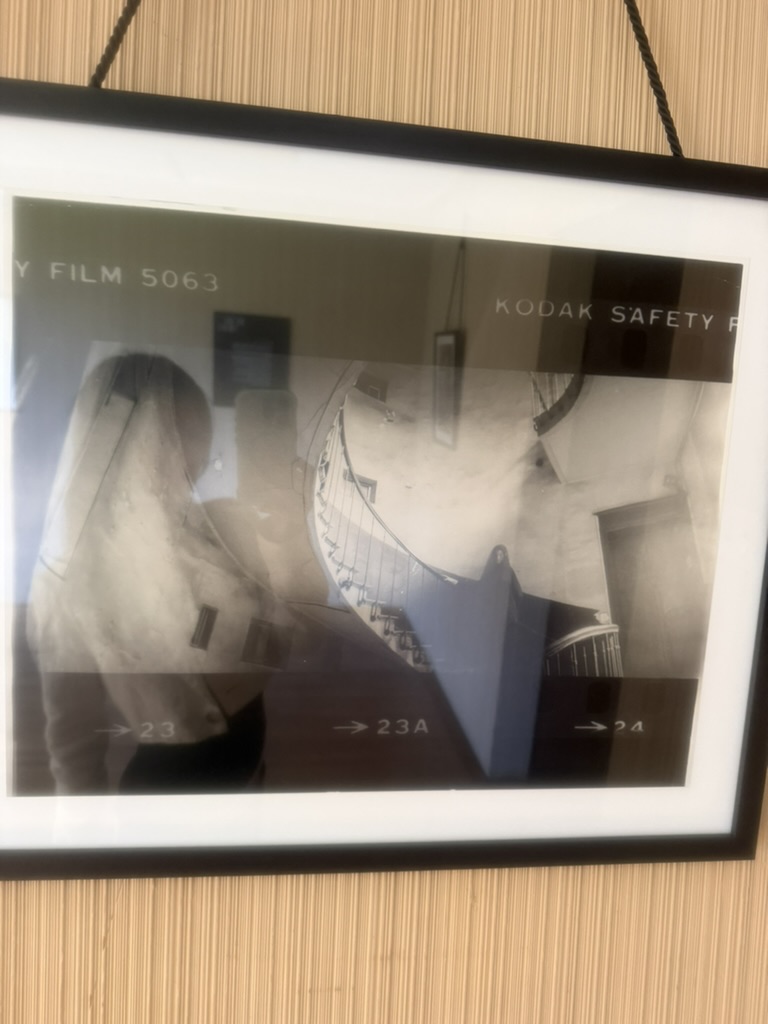
“When I’m making photographs, I think of films.”
Deborah Turbeville, 1985
Six years ago I wrote about the Hollyhock House for the first time. I called Aline Barnsdall a confident, strong, and entrepreneurial woman, rare for her time. This fall I went back and found two more women living in her house.
A room with four lives
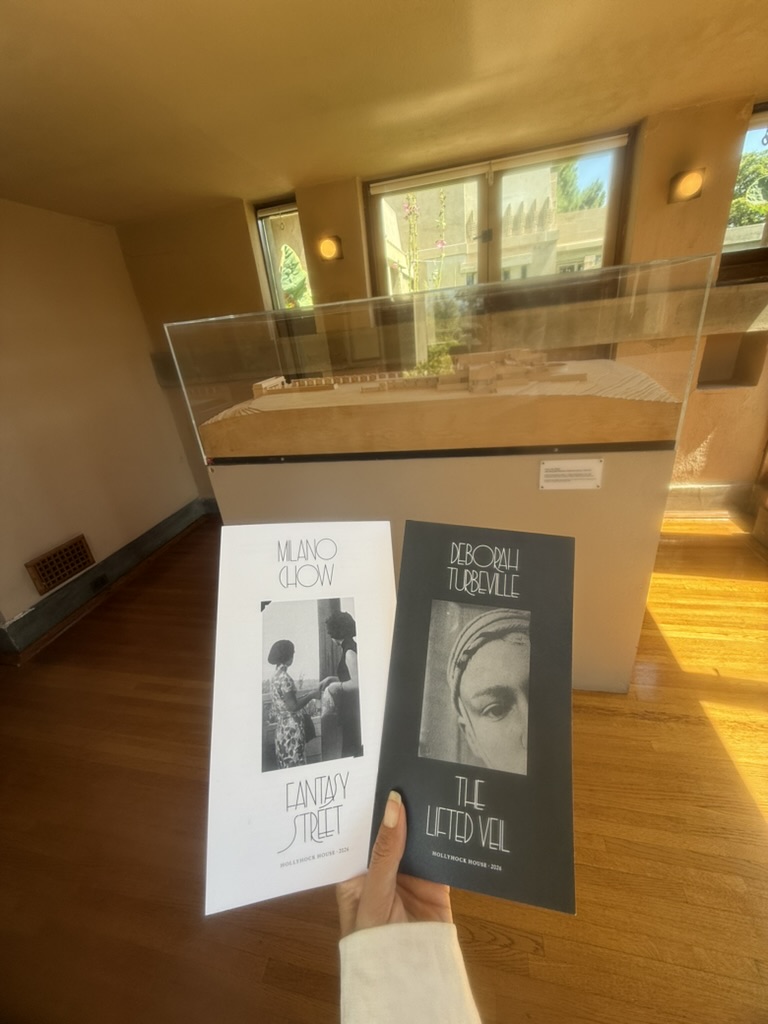
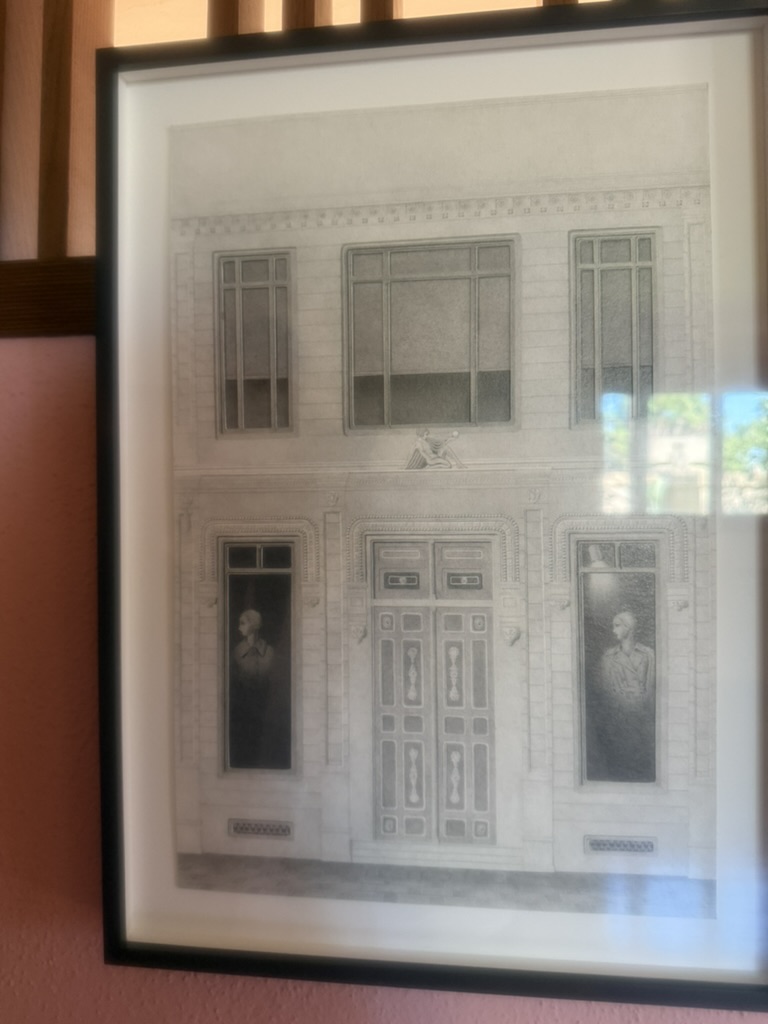
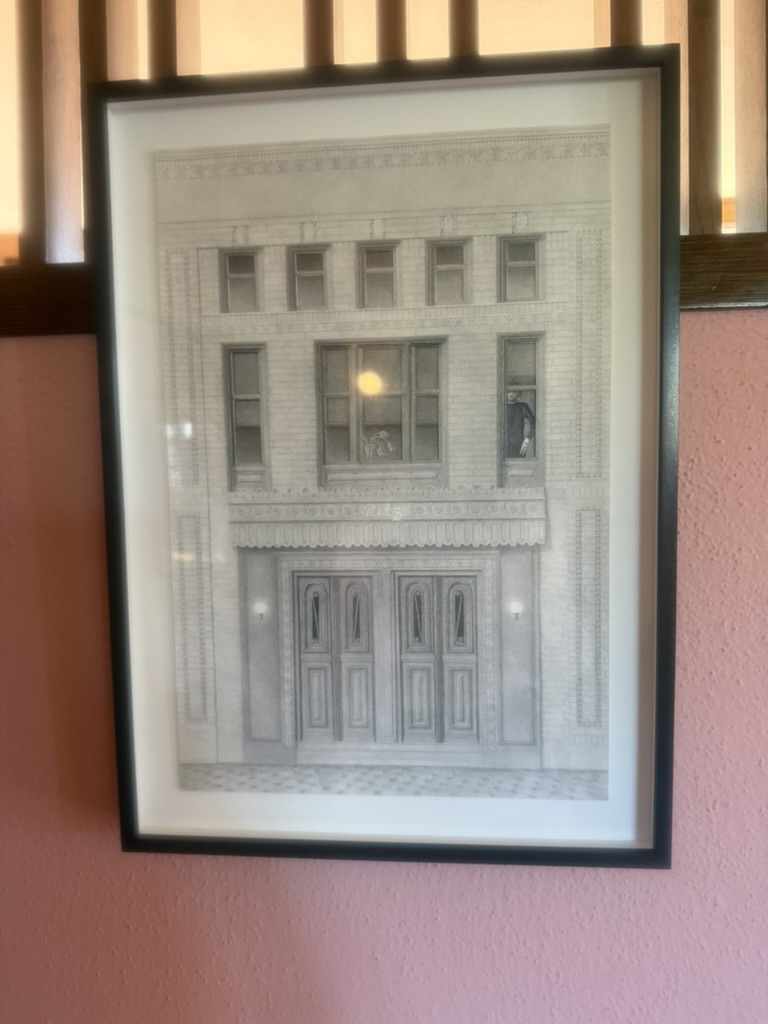
Milano Chow’s Fantasy Street is installed in a room that has never stopped changing. It was a child’s room in the 1920s, then a space for the California Art Club, then a ladies’ lounge for a social club in the 1940s and 50s. Today it holds silk folding screens, and on them, buildings that do not exist.
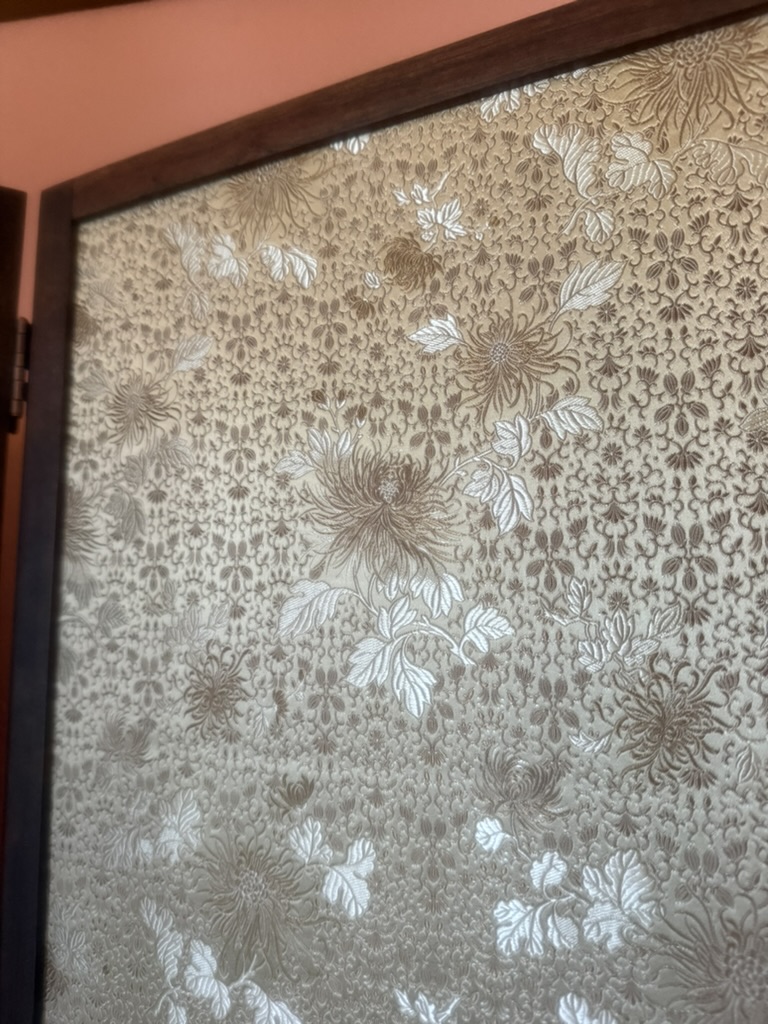
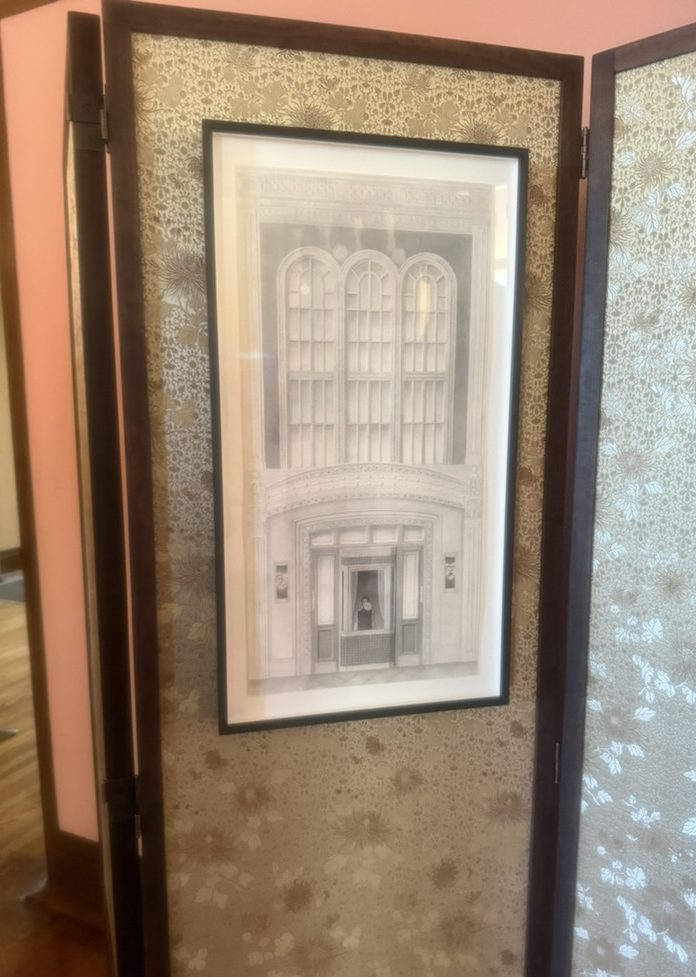
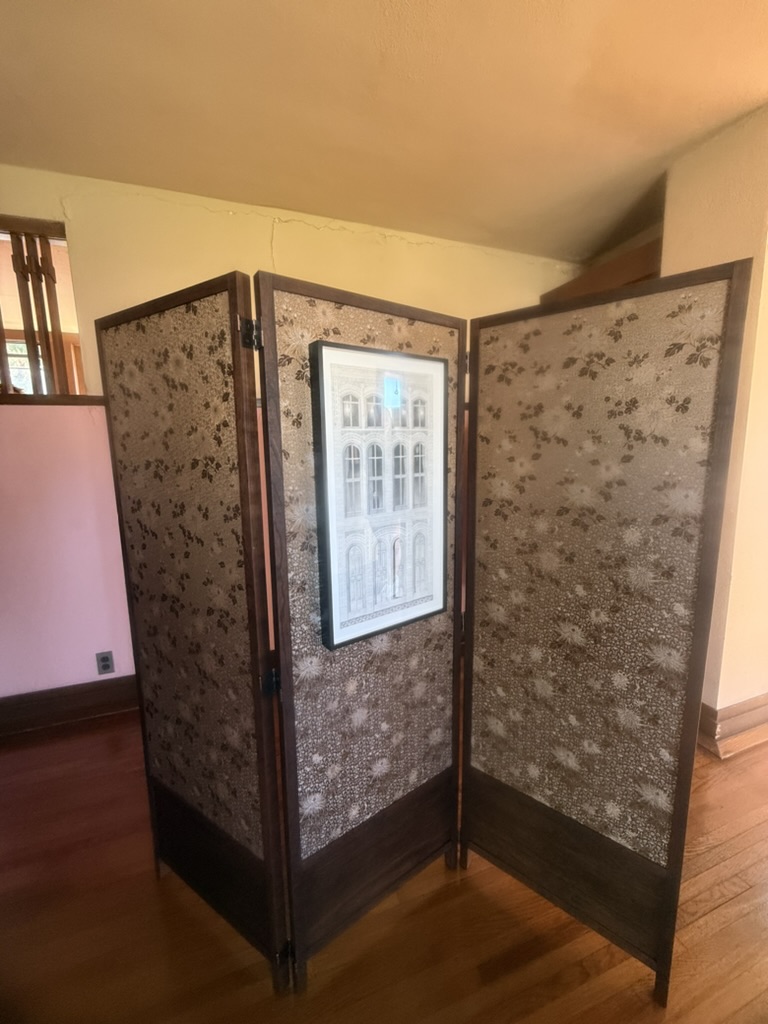
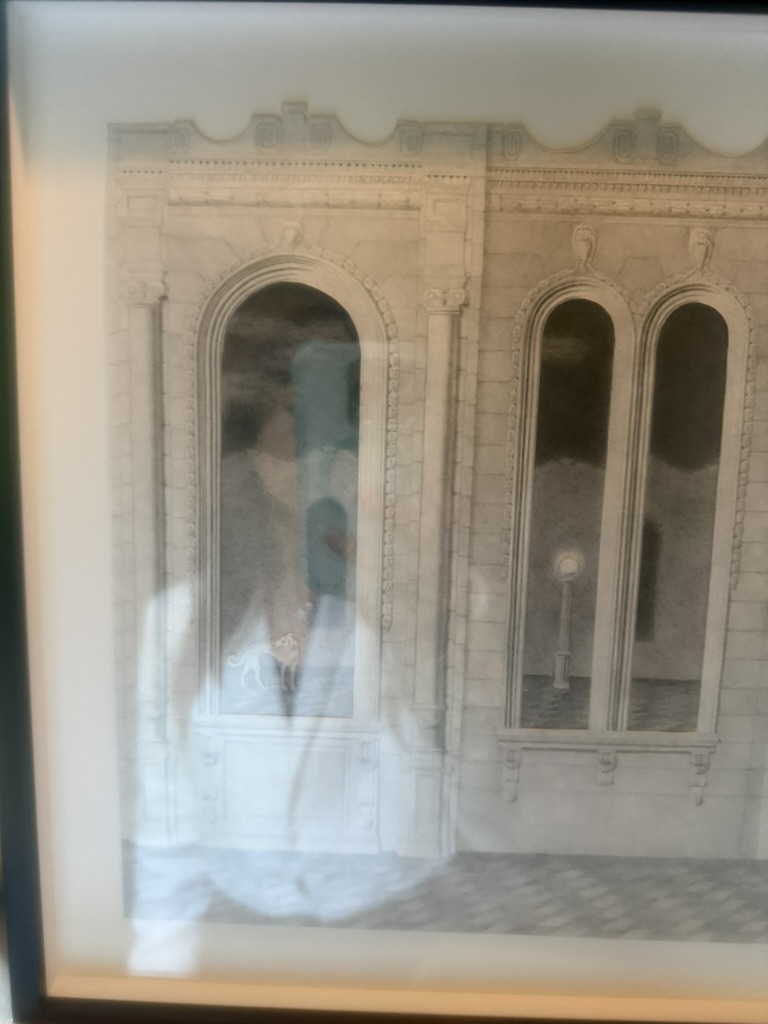
Chow went into the Los Angeles Public Library’s photo archives, pulled images of movie palaces, shop windows and apartment buildings from the years the house was built, and collaged them into new facades in graphite and ink. Arched windows, carved cornices, a woman waiting in a doorway, a man watching from the third floor. They look like documents. They are inventions made entirely from what was already there.
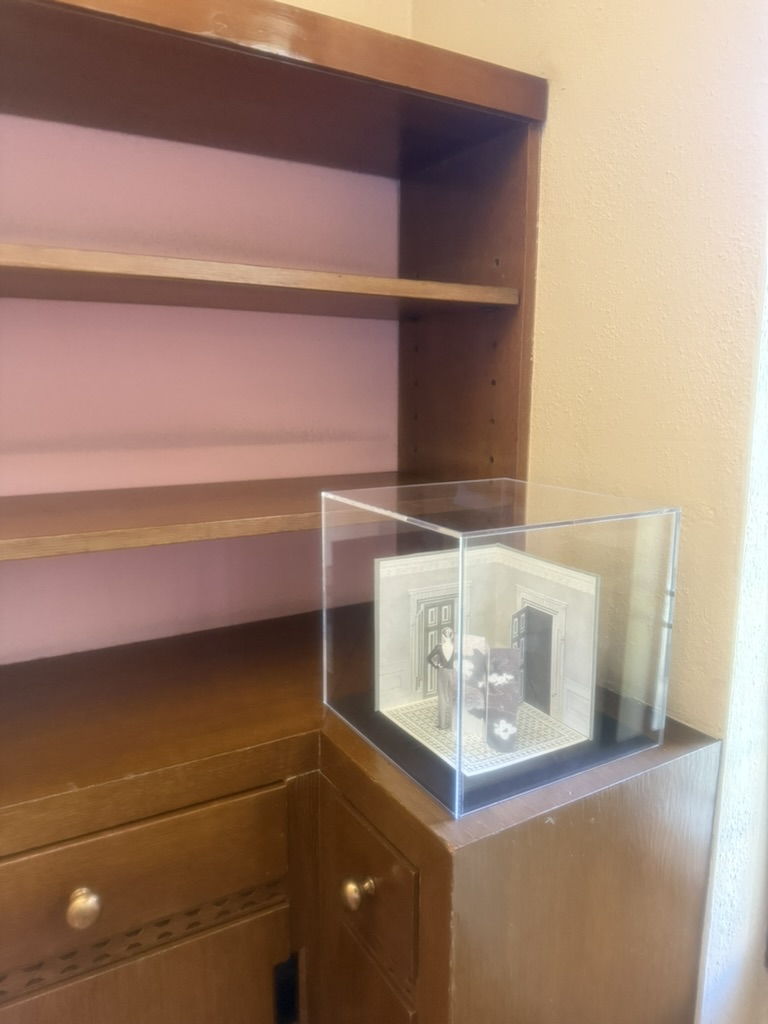
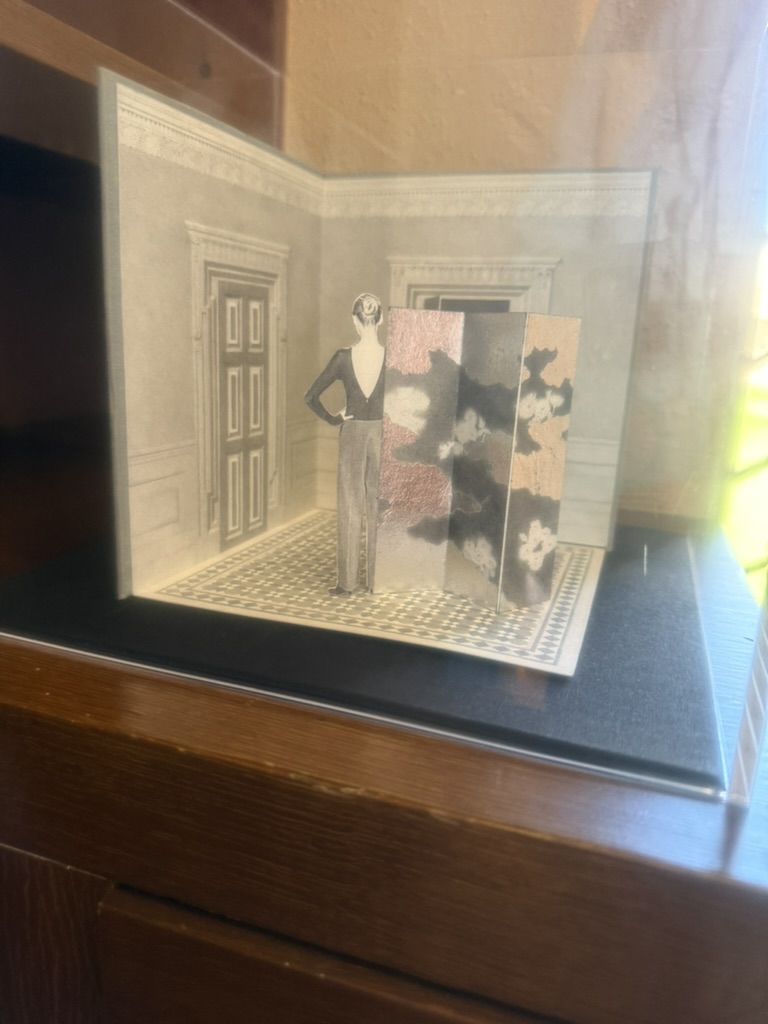
That is adaptive reuse on paper. Take the fragments of the past, keep what is beautiful, and build something that lives now. Even her installation follows the rule: she used Wright’s original built-ins as part of the display. A tiny paper room sits in an acrylic case on a shelf Wright designed a century ago, a woman in a backless dress beside her own folding screen, one door left open.
The lifted veil
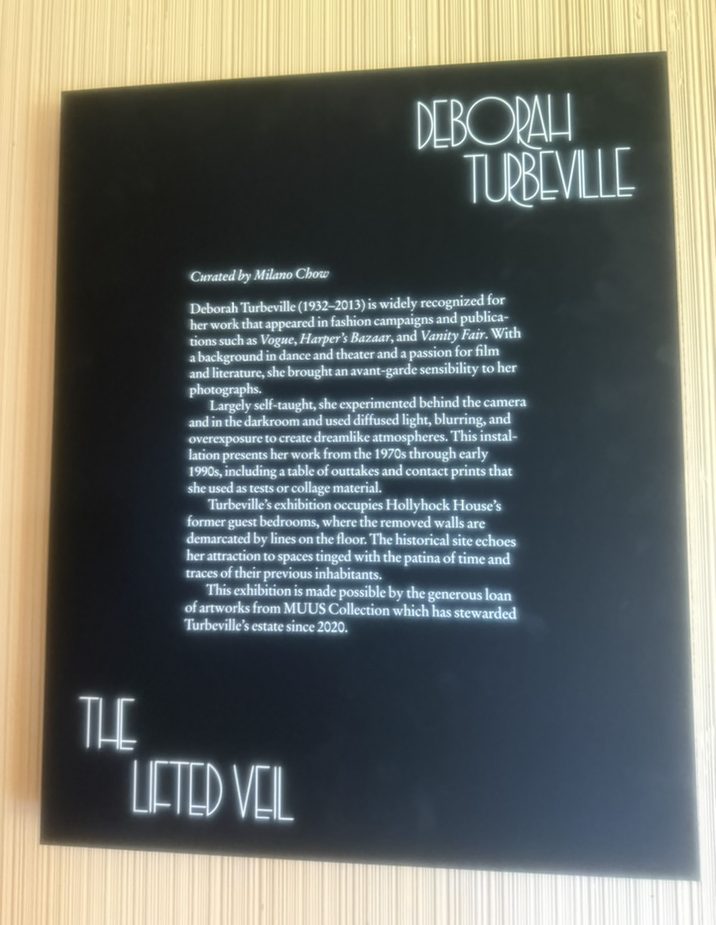
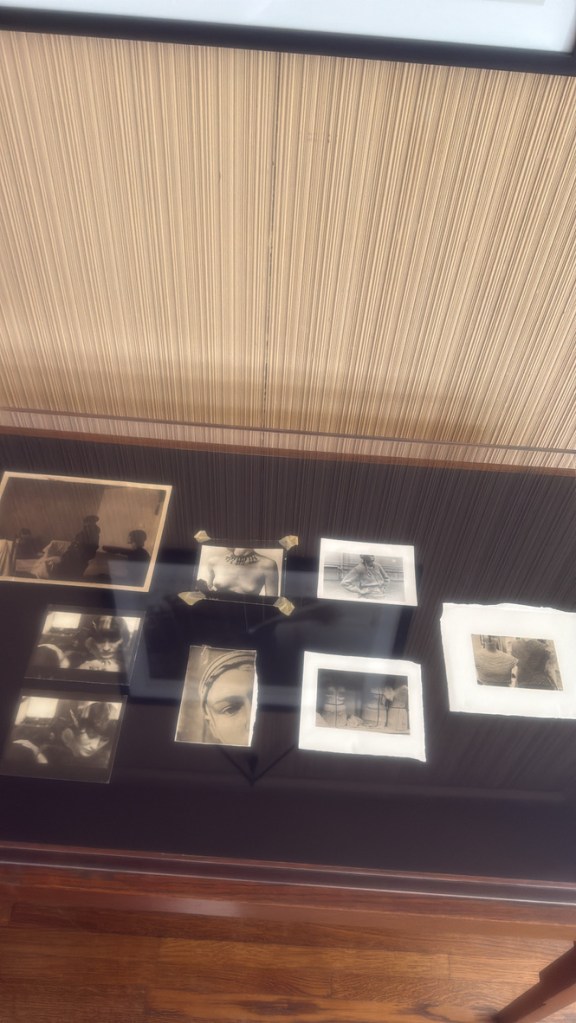
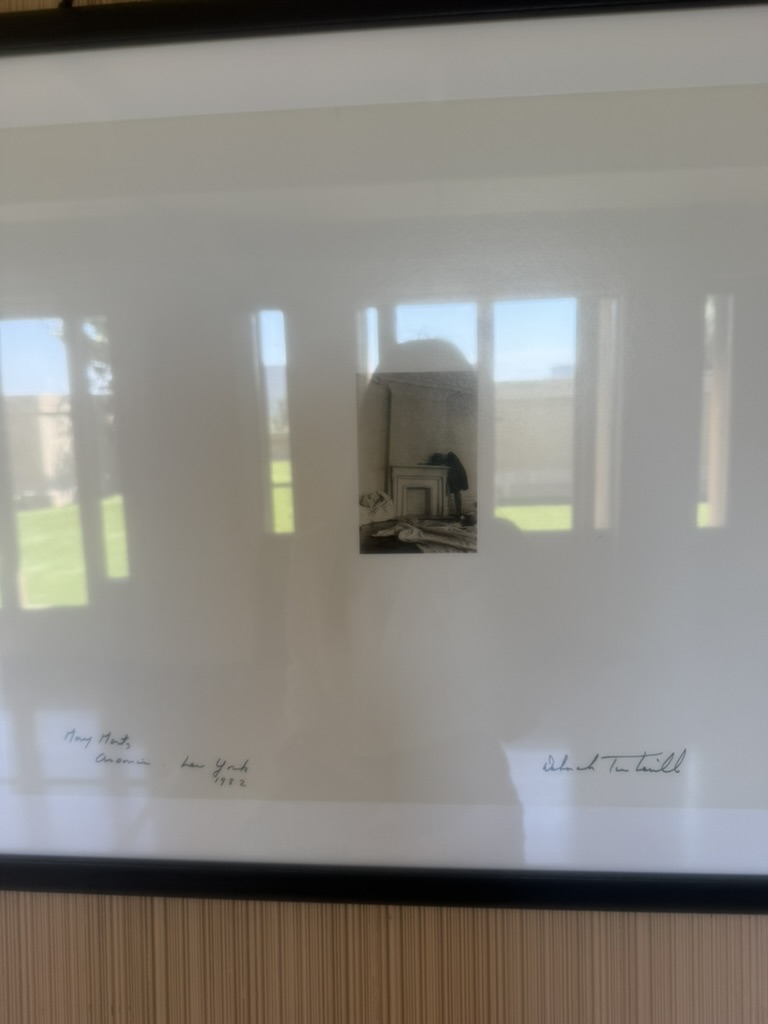
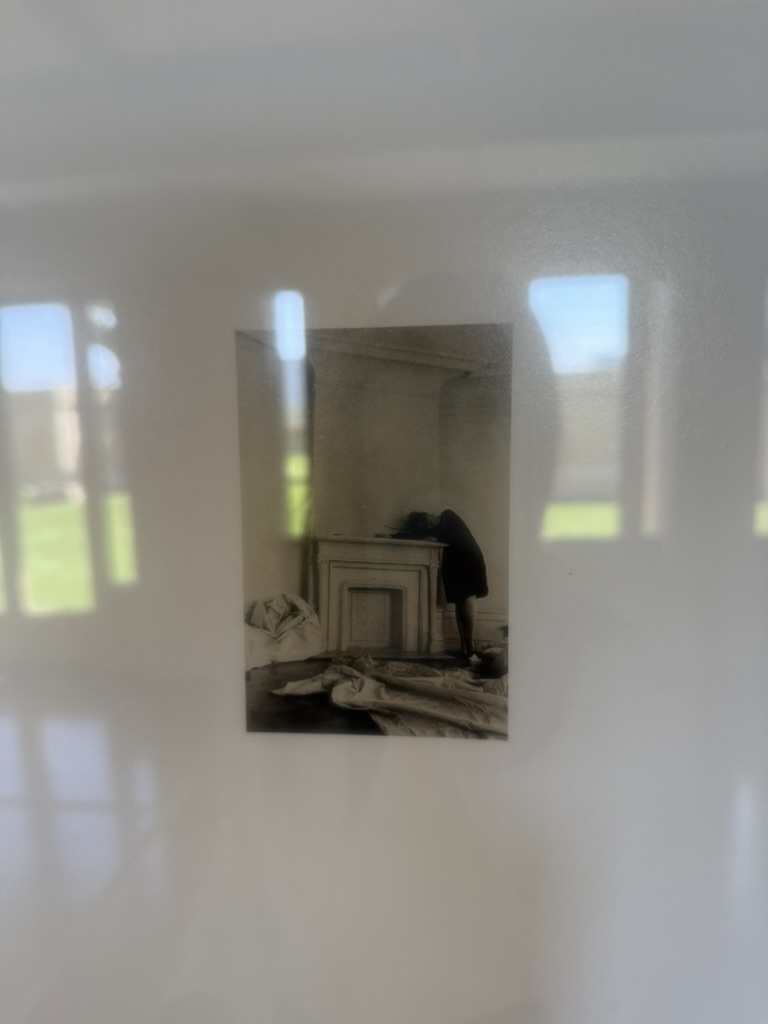
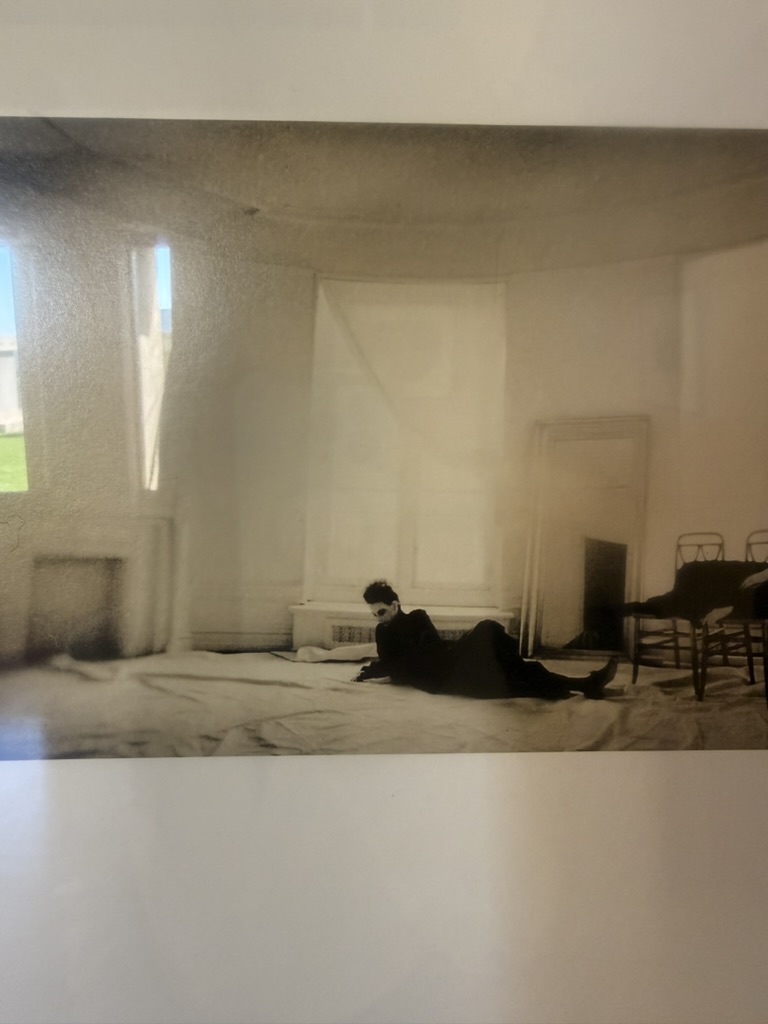
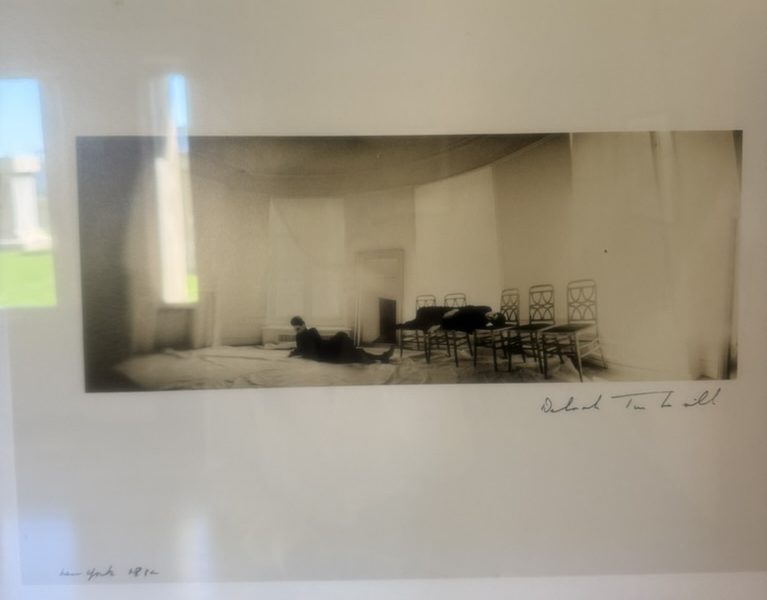
Down the hall, in what were once the guest bedrooms, Chow curated the work of Deborah Turbeville. Lines on the floor mark where walls used to stand. A building’s past life, drawn right at your feet.
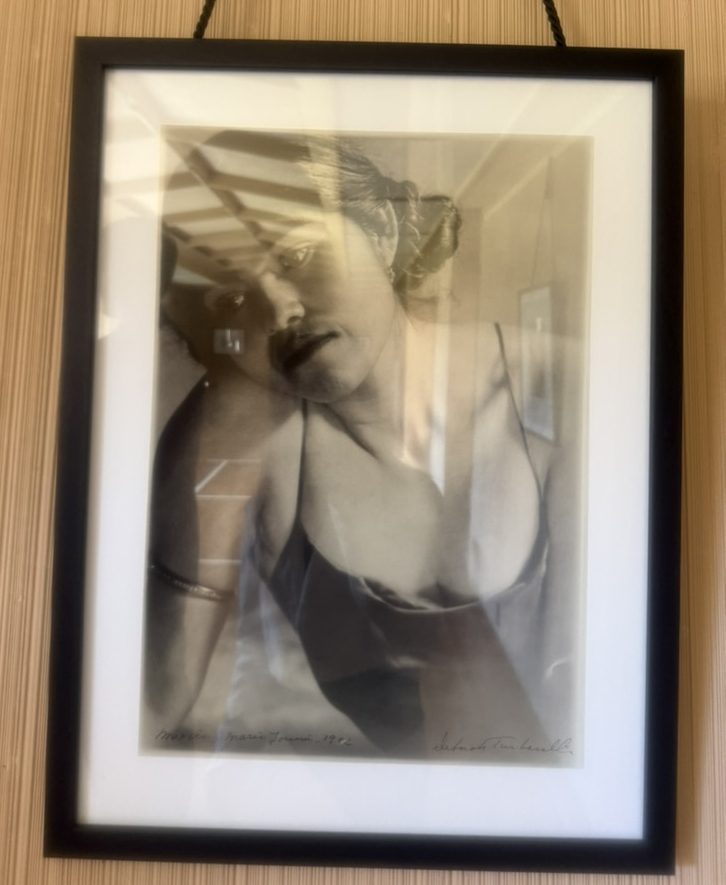
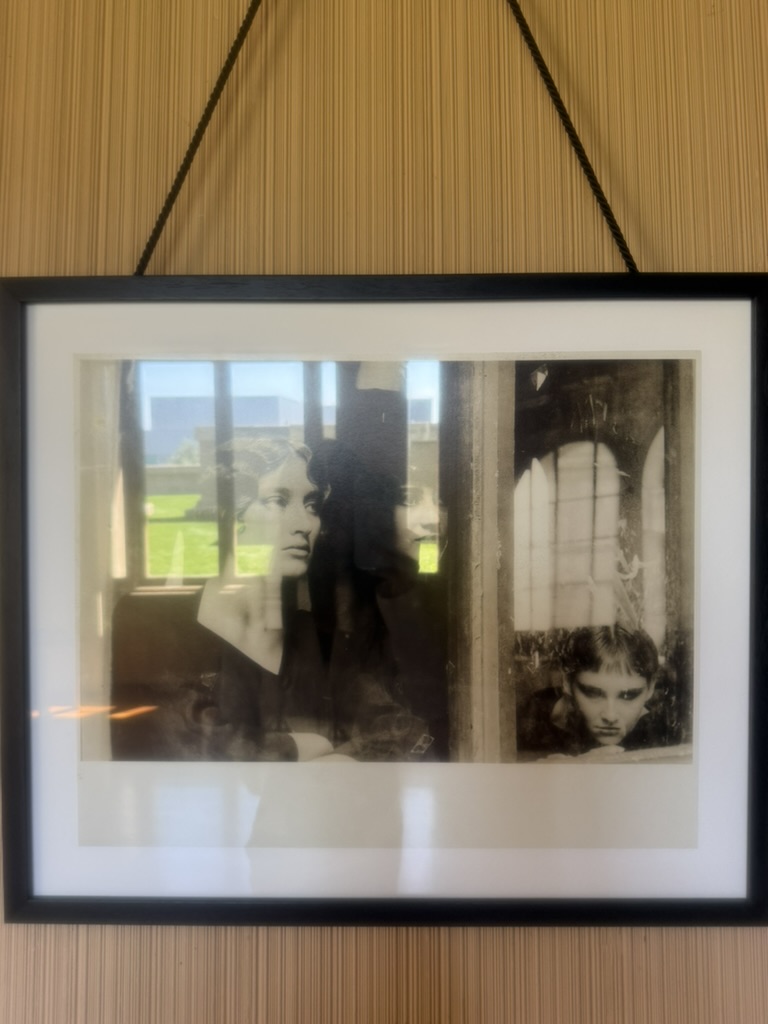
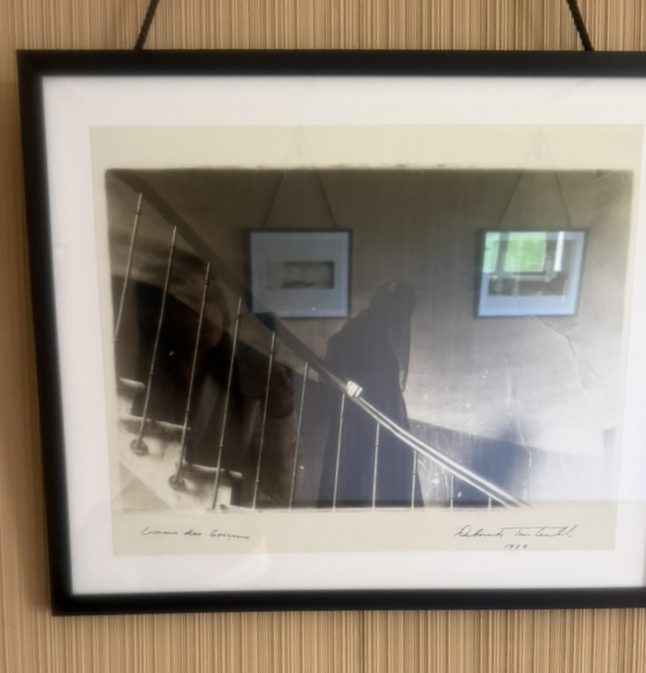
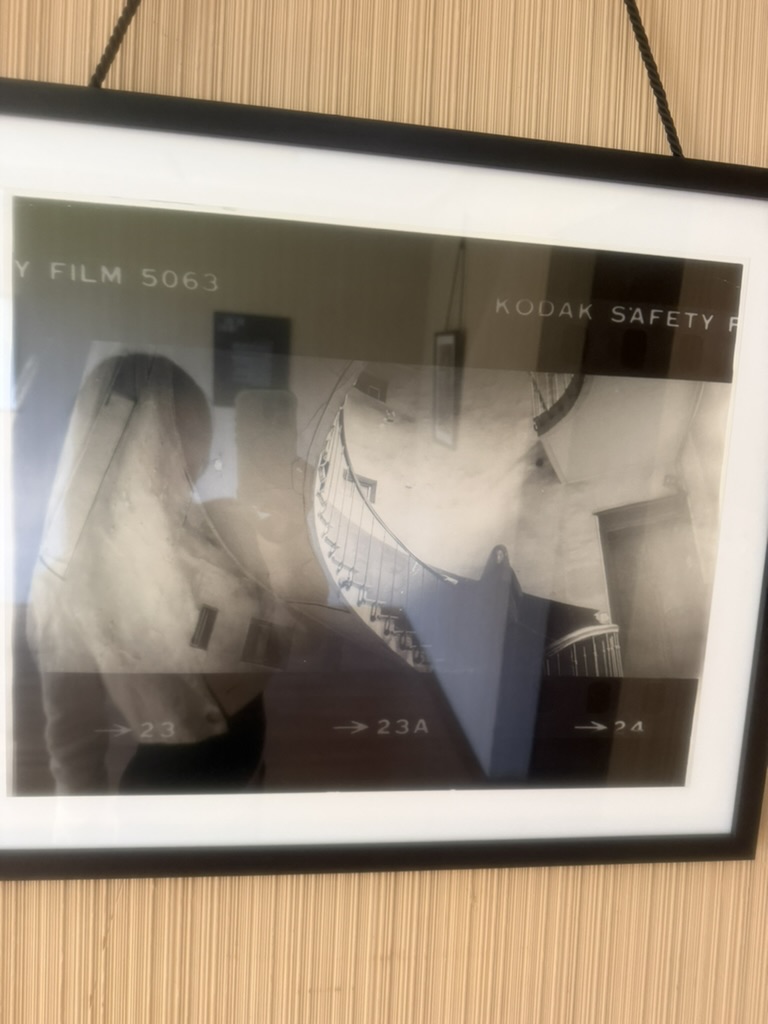
Turbeville shot for Vogue and Harper’s Bazaar, and she never wanted to be merely commercial. Where other photographers sold clothes, she sold a feeling. She brought art into the pages of a fashion magazine and made people stop turning them. Largely self-taught, she scratched and tore her own negatives and used blur and overexposure until new photographs looked like memories. Her women lean against cracked plaster, lie across empty floors, climb old staircases. A greenhouse from 1981 has clouded glass and plants pushing back in. A Kodak contact sheet shows frames 23, 23A and 24, outtakes she kept and reused as collage material.
Nothing wasted. Even the test shots got a second life.
Standing in front of the glass, I kept catching my own reflection inside her rooms. A blurred figure on her staircase, a face beside her women at the window. I didn’t fight it. It felt like being invited in.
Fashion, buildings, and what we already have
Growing up in Colombia, I watched my mom and aunt choose fabrics for their clients late into the night, and turn every home we lived in into something beautiful. I once wrote that beauty, for them, meant creating the most beautiful spaces from what we already have. I didn’t have the words then, but that was the circular economy.
Fashion and buildings follow the same law. A good suit gets tailored, not thrown away. A good building gets a new use, not a wrecking ball. Circular fashion, circular cities, circular lives: everything taken into account, everything mended.
An open heart
No one understood that better than Elsa Peretti. She walked runways in the 1960s, then became the designer behind Tiffany’s Open Heart and Bone Cuff. Vogue would call her arguably the most successful woman ever to work in jewelry.


But her greatest design may have been a village. In 1968 she bought a crumbling house in Sant Martí Vell, in Catalonia, and spent ten years restoring it. Then she kept going: house after house, farmhouse after farmhouse, the village church, until a forgotten place came back to life. She took what fashion taught her about form and beauty and gave it to buildings.
From the runway to a village. That is the path I recognize.
Deborah under the palm tree
There is another Deborah I think about. In the Book of Judges, Deborah was a prophet and a judge who sat under a palm tree, and people came to her for counsel. She did not wait for a seat at someone else’s table. She set her own, under the open sky, and led from there.
I work in commercial real estate, where I am often one of the few women in the room. I still remember the little navy suit dress I loved at Brooks Brothers, and the realization that femininity and the workplace were never meant to compete. A few years ago I helped bring developers and city staff to one open table in Pasadena. That conversation became the start of the city’s first Adaptive Reuse Ordinance. That was my palm tree.
Aline commissioned a house when women rarely commissioned anything. Turbeville bent the fashion world to her own vision. Peretti rebuilt a village. And Chow, a century after Hollyhock House was built, turned a child’s bedroom into a stage and then handed the spotlight to another woman.
That last part stays with me. The path matters, but so does who walks it next. Every deal, every ordinance, every building we save is also a door left open for the women coming behind us.
For years I wondered whether this path was meant for me. Standing in these rooms, I stopped wondering.
Mending
Hollyhock House fell into disrepair before it was brought back. Now it holds the work of women who know that nothing is ever truly finished, only waiting for its next use. A child’s room becomes a gallery. An outtake becomes a collage. A ruined village becomes a home. A woman in a male-dominated field becomes the one holding the door.
Lift the veil and that is what you find. Not a ruin, but a beginning.
XOXO,
Milano Chow: Fantasy Street and Deborah Turbeville: The Lifted Veil are on view at Hollyhock House through December 20, 2026.