
A conversation about solar
I met Kevin Yaun months ago, and we didn’t talk about painting. We talked about solar. It was one of those conversations where you realize the person across from you sees the world through a lens very close to your own.
We both notice the vacancies. The empty storefront, the dark window, the house too beautiful and too expensive to ever feel like home. And we both believe that what we do should speak louder than what we say.
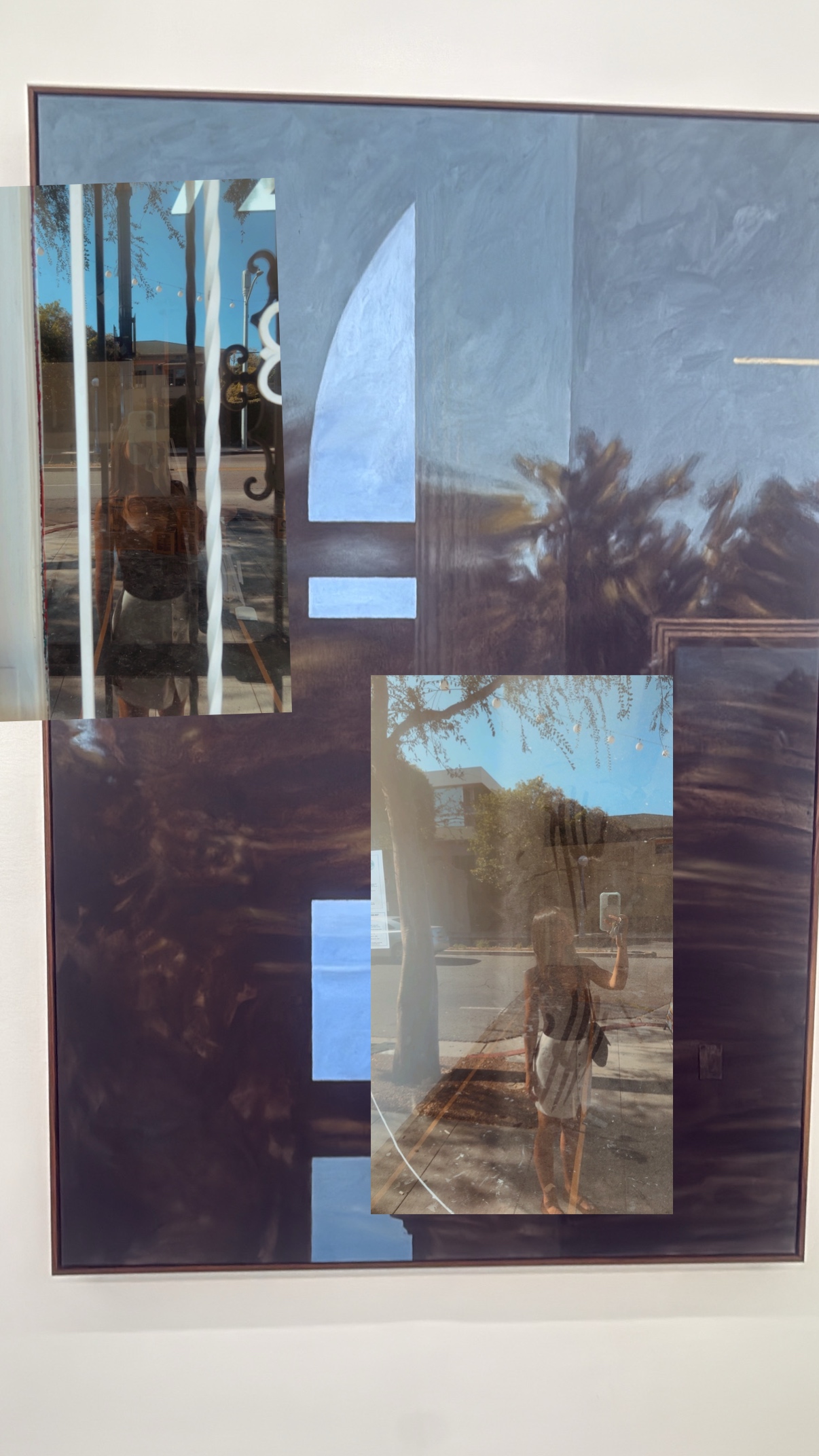
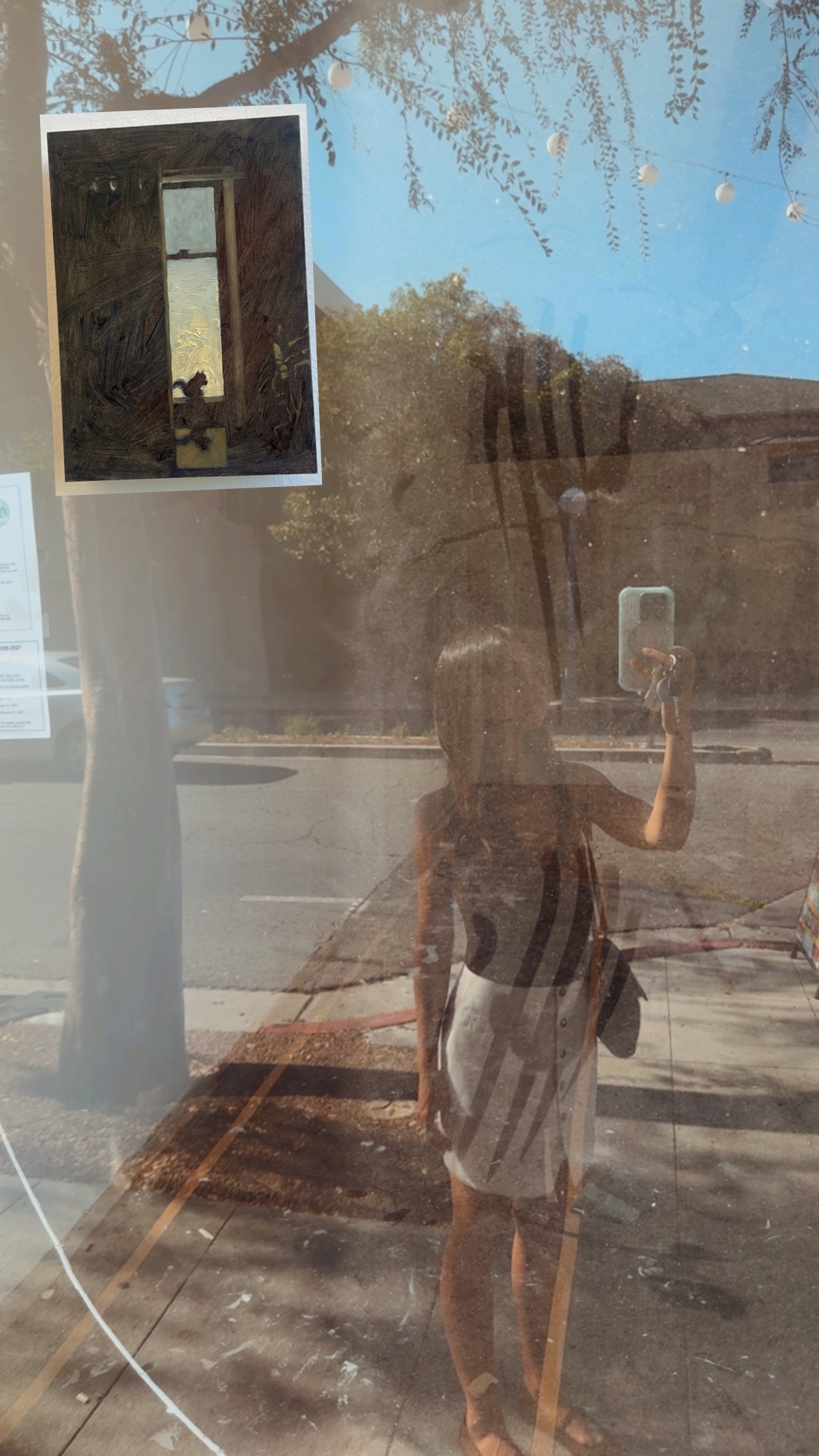
Then I walked into Slow Burn, his solo show at Megan Mulrooney Gallery, and understood that Kevin had been saying all of it, quietly, with a brush.
Renoir painted the everyday. Kevin paints what the everyday is hiding.
Pierre-Auguste Renoir made his name painting ordinary people living ordinary lives: Parisians dancing at the Moulin de la Galette, friends lingering over lunch on a riverside terrace. He took the everyday and gave it light.
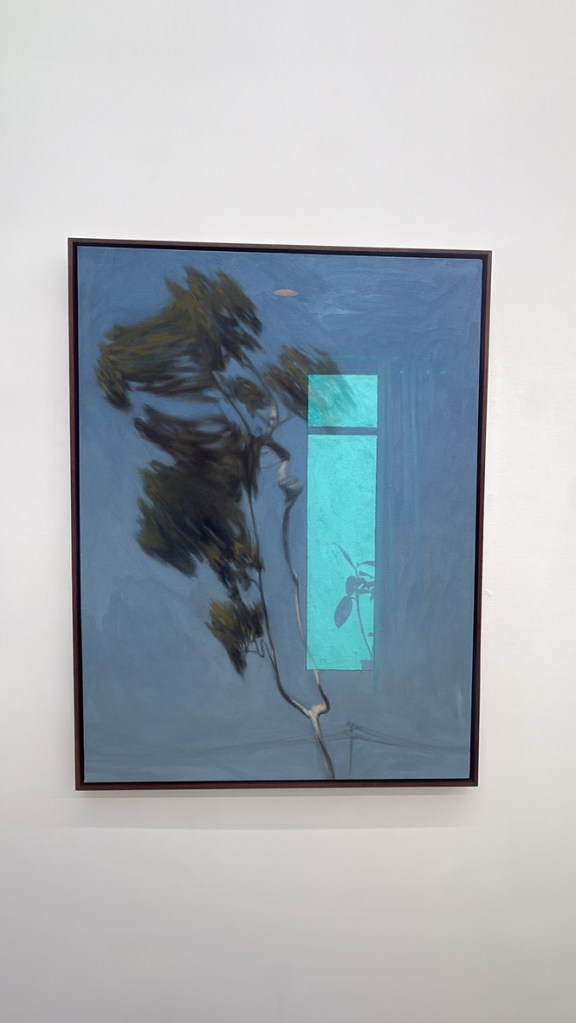
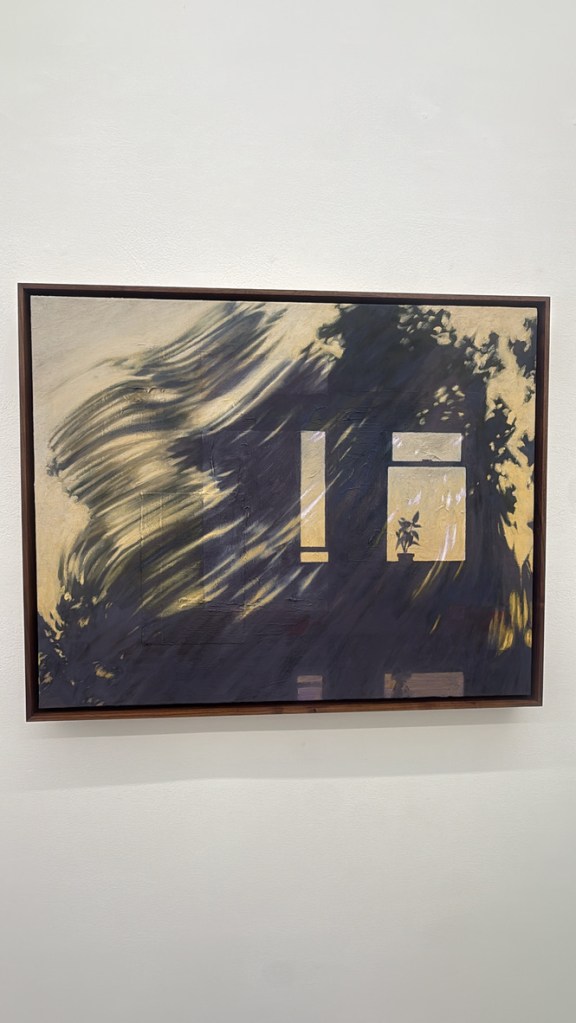
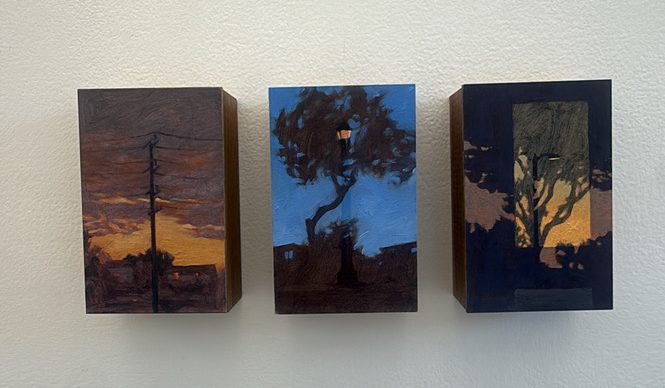
Kevin does the same thing, a century and a half later. A kitchen faucet. A utility pole against the sunset. A eucalyptus bending in the wind outside a window. A street lamp tangled in a tree. These are the scenes we pass a hundred times a week without looking.
The difference is what the light reveals. Renoir’s light was joy. Kevin’s light is a warning, softened just enough that you lean in instead of looking away. He describes our collective home as being in a slow boiling crisis, and the painting that made it click for me was a lobster.
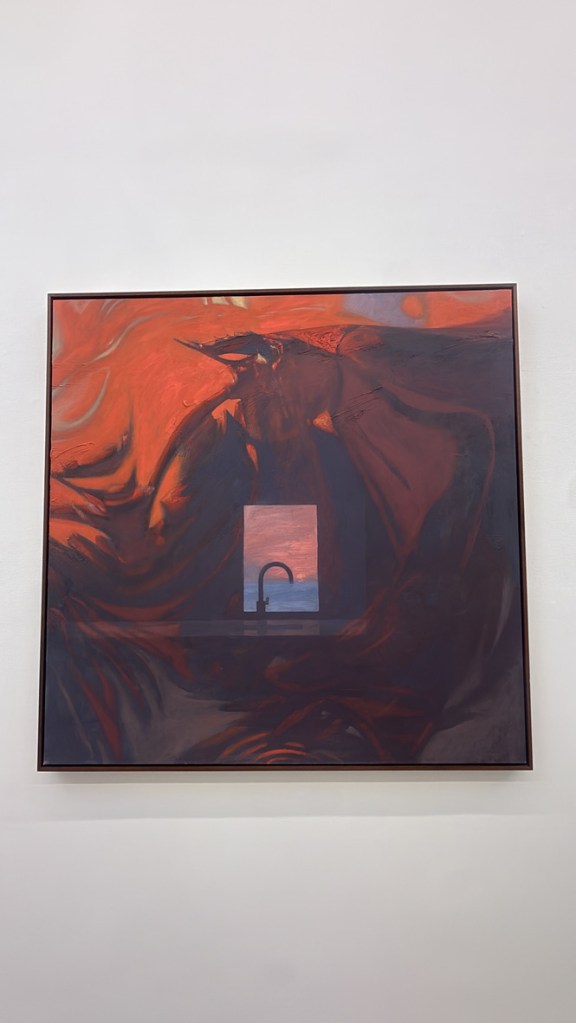
Its red shell and claws fill the whole canvas, and at its center sits a small kitchen window: a faucet silhouetted against a sunset over the sea. We all know the story of the lobster in the pot, which doesn’t notice the water heating until it’s too late. Kevin paints it from inside the pot. The faucet is the quietest detail and the sharpest one. The ocean is right there, the water keeps running, and we keep cooking.
The light in the window
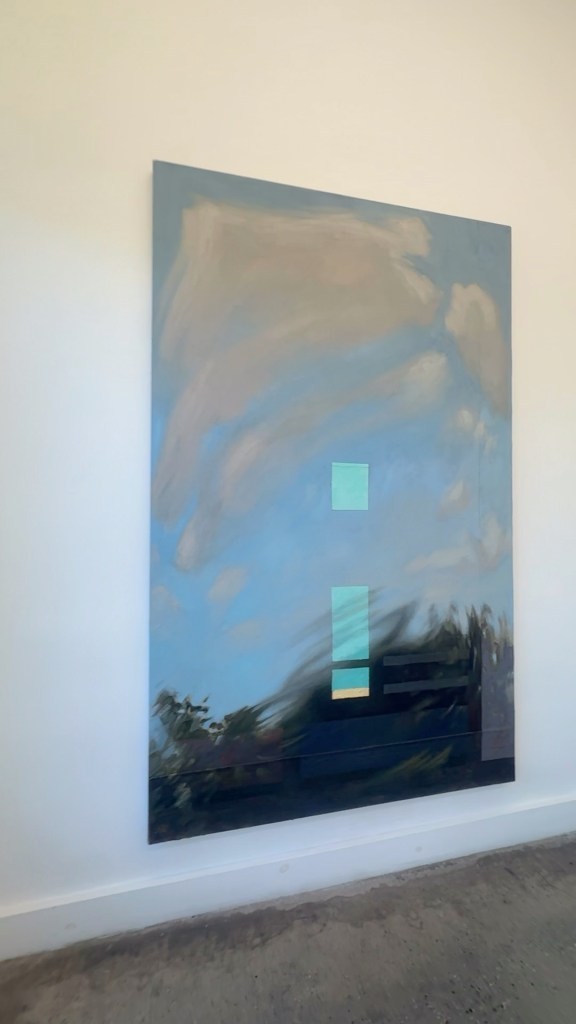
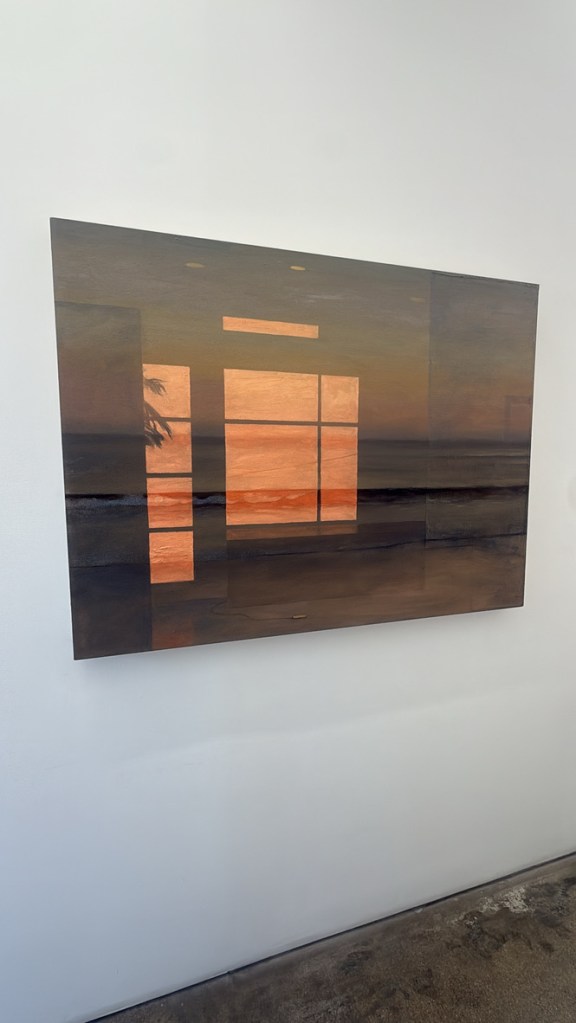
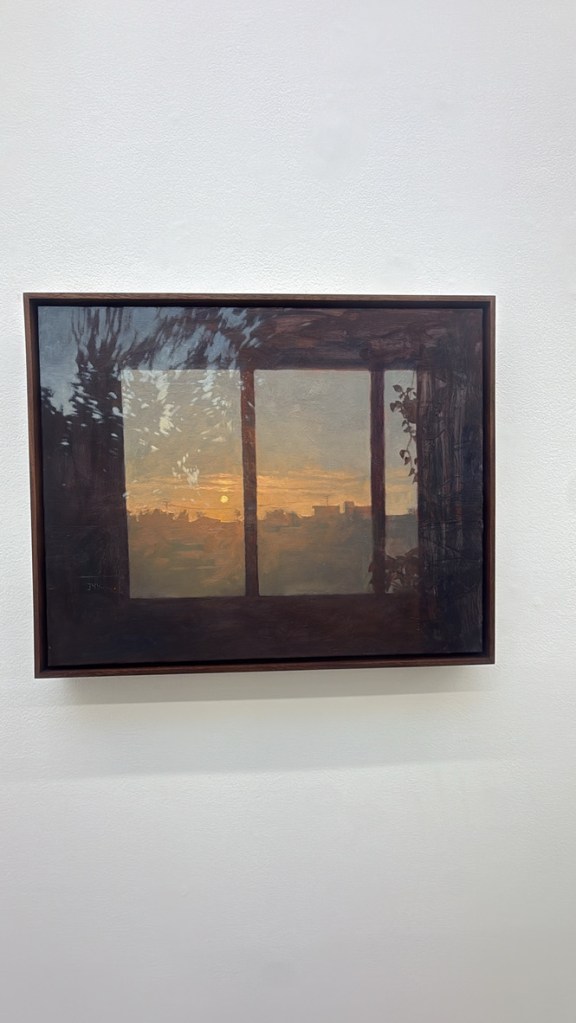
Almost every painting in Slow Burn has a window, and almost every window glows. You stand outside, in the dark, looking at a warm rectangle of light you cannot quite reach.
Kevin has said that living on the California coast has him thinking about beautiful but unattainable housing. As someone who spends her days in buildings, leasing them, selling them, fighting to save them, I felt that in my chest. Those lit windows are the homes so many of us can see and never enter.
They are also the vacancies. The windows in his paintings are often empty of people. What I see in my work every week, the dark storefront, the building waiting for a second life, Kevin paints from the other side of the glass.
Classics for a modern dystopia
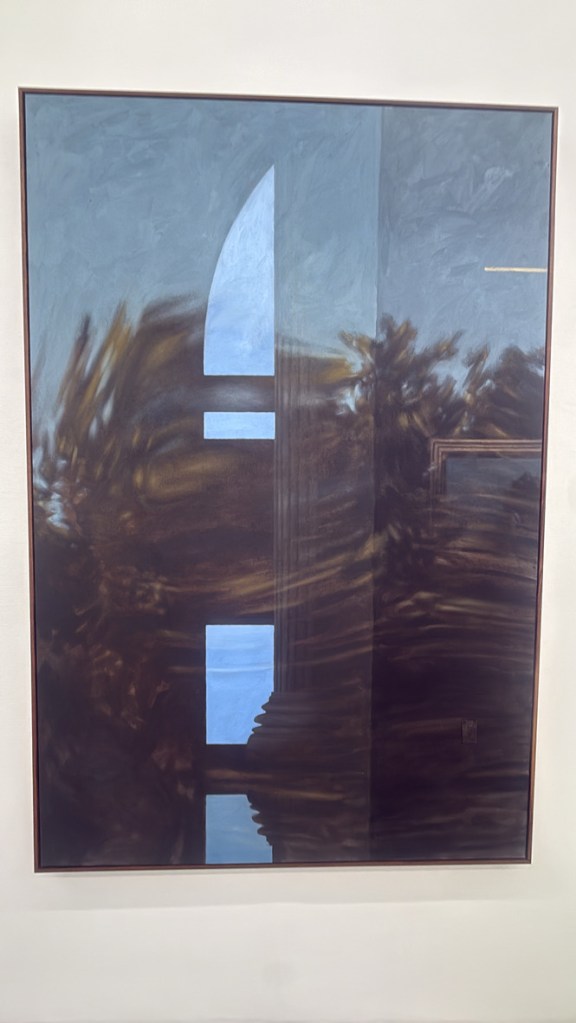
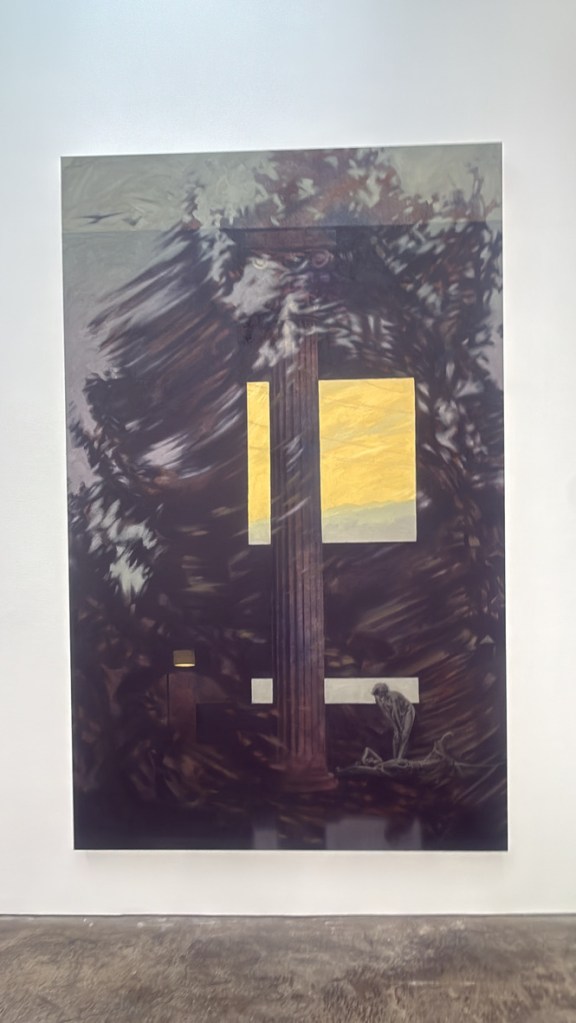
Kevin promised “sneaky art history references,” and he delivers. He places himself in the lineage of Caspar David Friedrich, the Romantic painter who stood small figures before vast, overwhelming landscapes to capture the sublime. In Kevin’s largest canvas, a classical column rises through a storm of shadowed leaves while a lone figure bends at its base. The ruin and the wilderness, still arguing.
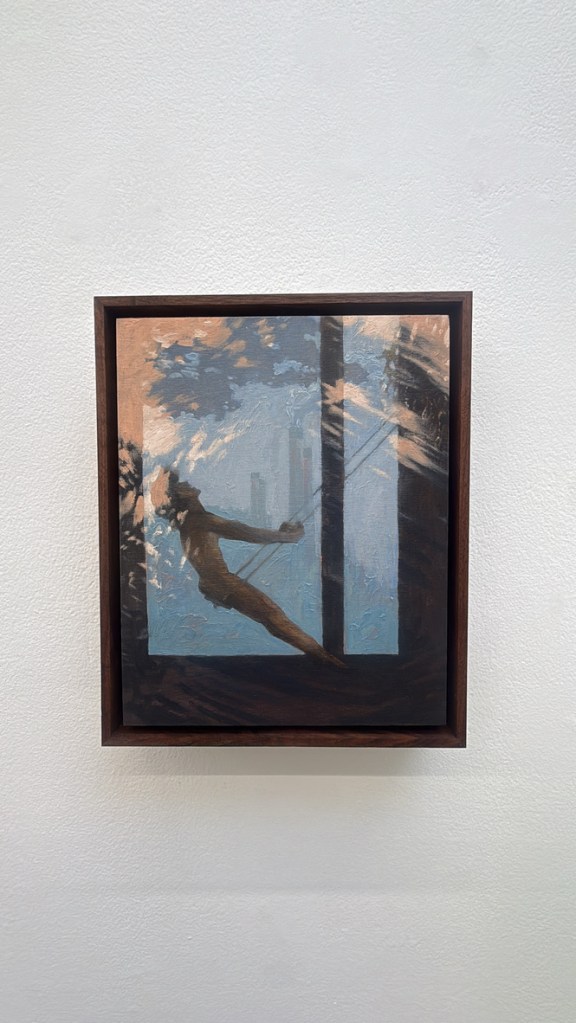
In a smaller panel, a figure flies forward on a swing through dappled light, and I couldn’t help seeing Fragonard’s The Swing, that playful 18th century painting of leisure, now set against a hazy city skyline.
And those glowing windows kept pulling me back to Gatsby, reaching across the dark water toward the green light on Daisy’s dock.
Living by the proforma
The Roaring Twenties ran on projections. Stocks bought on margin, prairie plowed past what it could bear, fortunes built on the promise that tomorrow would always be bigger than today. Then came the crash of October 1929, the Great Depression, and the Dust Bowl, when the overworked plains blew away in the wind.
I work with proformas every day. A proforma is a story about the future told in numbers: rents will rise, vacancy will stay low, the exit will be kind. For decades we built our cities to those stories. We tore down what worked to build what penciled.
When the economy turns, as it has now, the gap between the spreadsheet and the street shows up in plain sight: empty storefronts, stalled projects, deals that no longer make sense. That is what I see in Kevin’s gold windows. A beautiful projection glowing in the dark, that most of us can only look at from outside.
The answer isn’t a rosier spreadsheet. It’s bringing our numbers back down to earth and valuing what is already here: the building already standing, the materials already in it, the neighborhood already around it. That is the circular economy. Repair before replace. Reuse before rebuild.
After the 1920s came a rebuild: public works, electrification, a new deal with the future. We are standing at that same turn. The question is whether we keep living by the proforma, or start living by what is real.
He lives the way he paints
What moves me most is that Kevin isn’t preaching. He’s living it.
He traded his car for an EV van, put solar panels on the roof, and drove to Marfa, Texas, painting along the way. He showed that work in a small gallery set up in a laundry room. He’s been building the van into a camper ever since, planning more art road trips.
Even his materials tell the story. His studio practice begins outside, gathering the homes, windows and trees that catch his eye. Then he stretches canvas drop cloth and everyday hardware store materials into painting surfaces. Nothing precious, nothing wasted. The greenest building is the one already built, and maybe the greenest canvas is the one already in the hardware store aisle.
As an entrepreneur, I know what it means to bet on yourself, to build something before anyone tells you it’s worth building. We have no shortage of “advocates” right now. We have a shortage of people whose actions lead their words. Kevin doesn’t shout. He lets the brush do the talking, and the brush captures what shapes our thoughts, our decisions, our world, while quietly pushing that world somewhere new.
What if the city became the art?
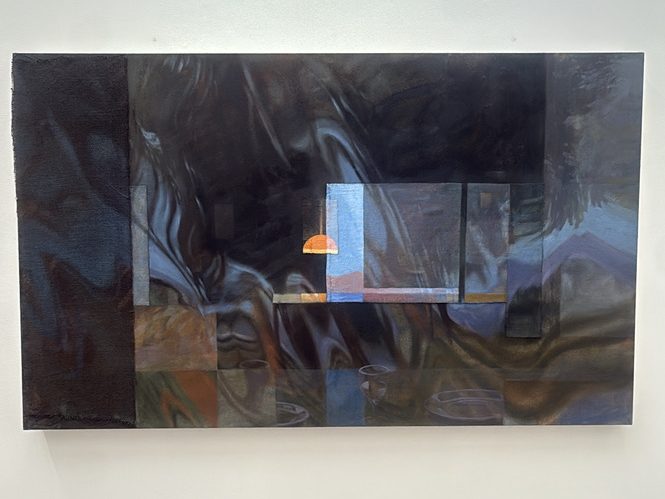
Kevin blends abstraction and realism until interior and exterior bleed into each other. The tree is inside the room. The sunset is inside the kitchen. Some of it is blurry on purpose, the way the things we yearn for most are blurry.
The gold in his windows is an illusion, the proforma kind: a value we can see but cannot live in. But illusions don’t last forever. Eventually the numbers catch up with reality, and when they do, they push us to do the right math. To count the building already standing, the tree already shading the street, the neighborhood already holding its memory. To give value to what matters most.
I believe that day is coming. And when it does, I keep asking myself one question: what if the cities we live in really became the art we see? Streets that glow like Kevin’s windows, with the doors open this time. Old buildings repaired, gold in the seams. Light that isn’t out of reach, but home.
Kevin has paint. I have buildings. Different tools, same lens: notice what’s empty, act before you speak, and let the work show what a city could be.
Follow Kevin’s work at @kevinyaun.

